$100 Cash → Money
Cash can be exchanged directly between currencies. If you have $100 cash, the transaction is a currency conversion.
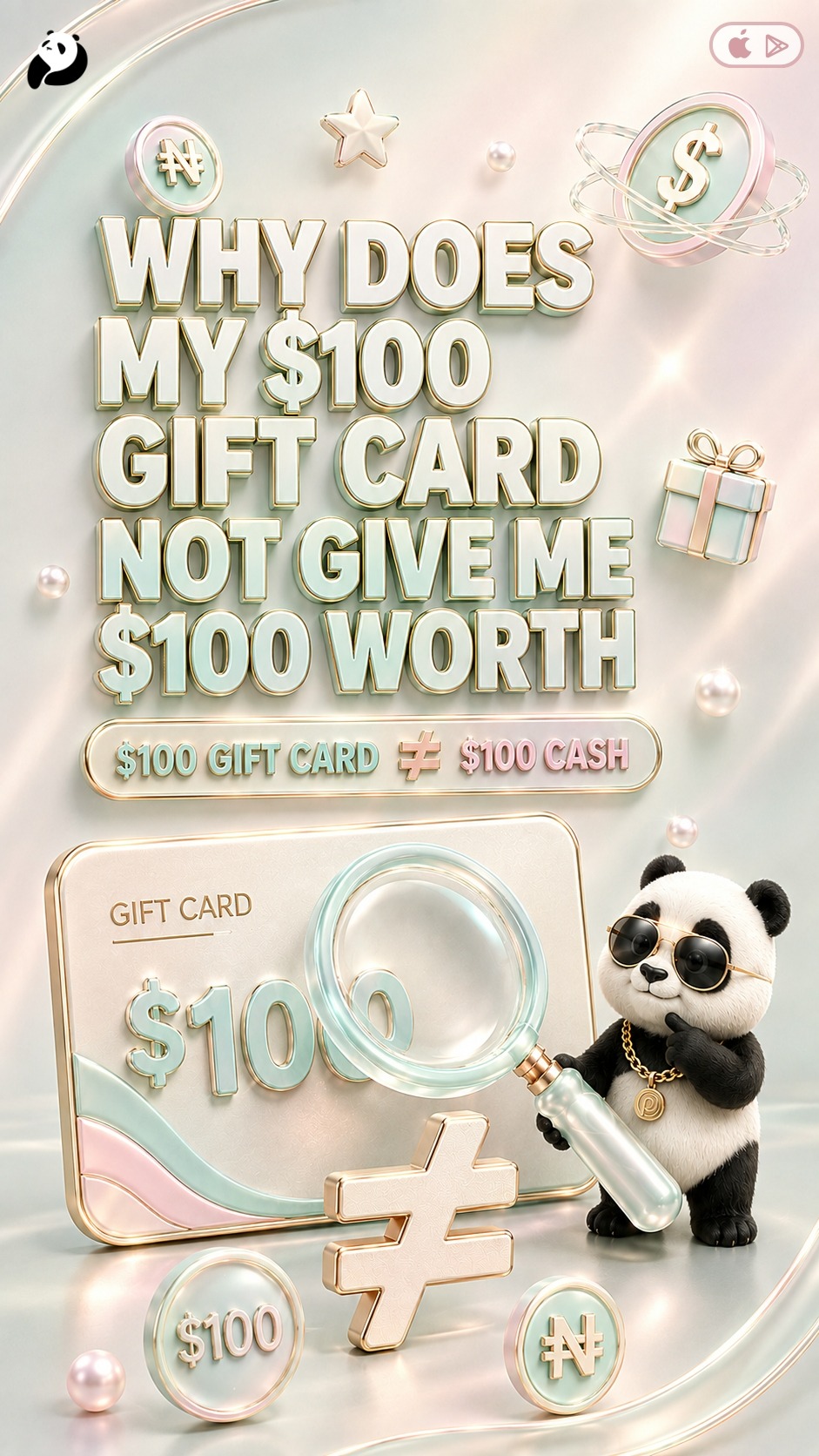
A gift card may show the same number as cash, but it represents a different kind of value. The difference starts with one simple idea.
The printed amount tells you how much value the card can normally be used for. When you sell it, a different value becomes important: the card’s trading value.
Cash is money. A gift card is stored spending value connected to a particular brand, store, or service.
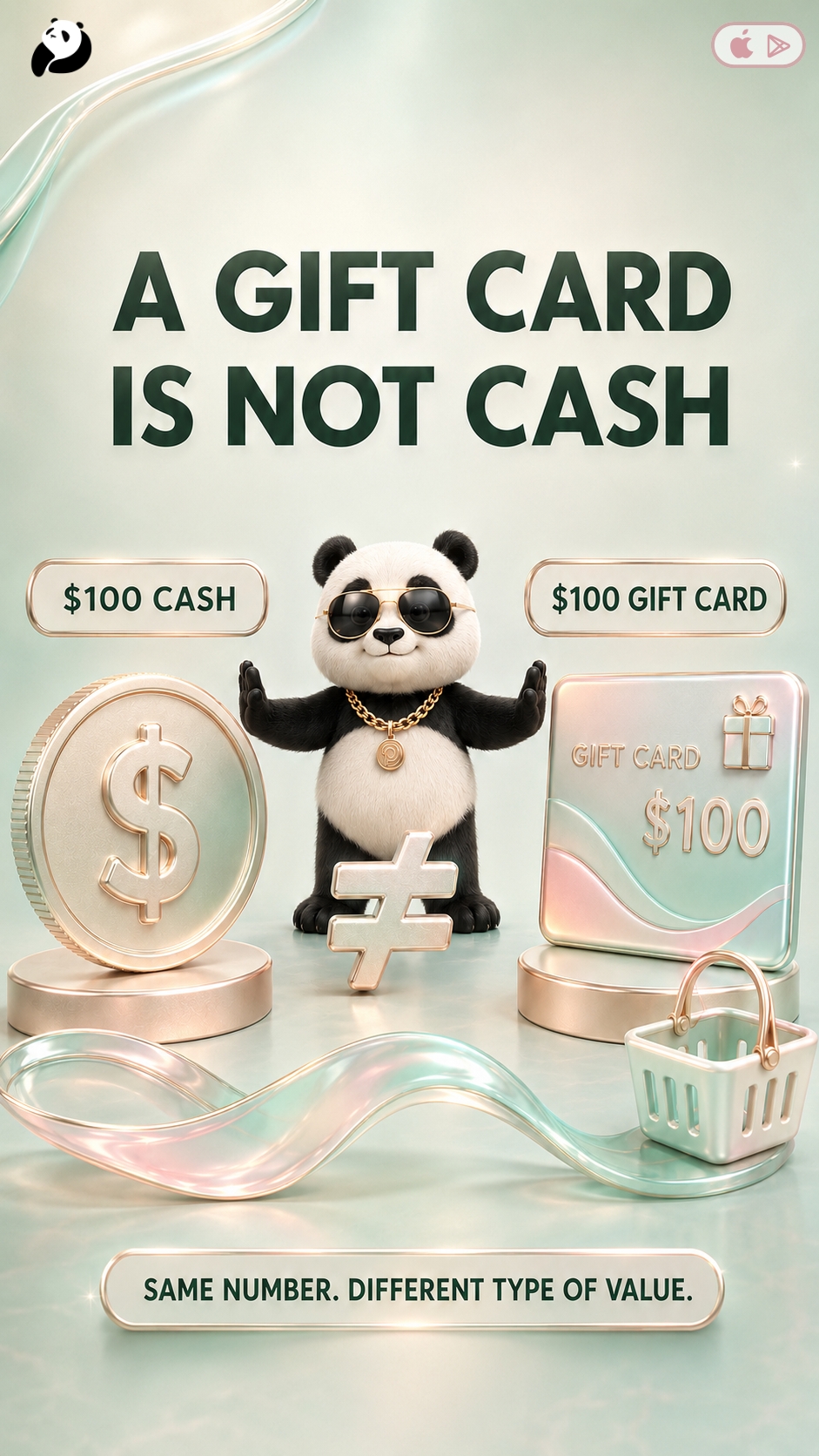
Cash can be exchanged directly between currencies. If you have $100 cash, the transaction is a currency conversion.
A gift card is designed to be used within its supported brand or service ecosystem. It is not currency sitting inside the card.
This is why a $100 gift card should not automatically be treated like $100 cash when you calculate a Naira payout.
The $100 printed on the card is its face value. It describes the value the card can normally provide when used.
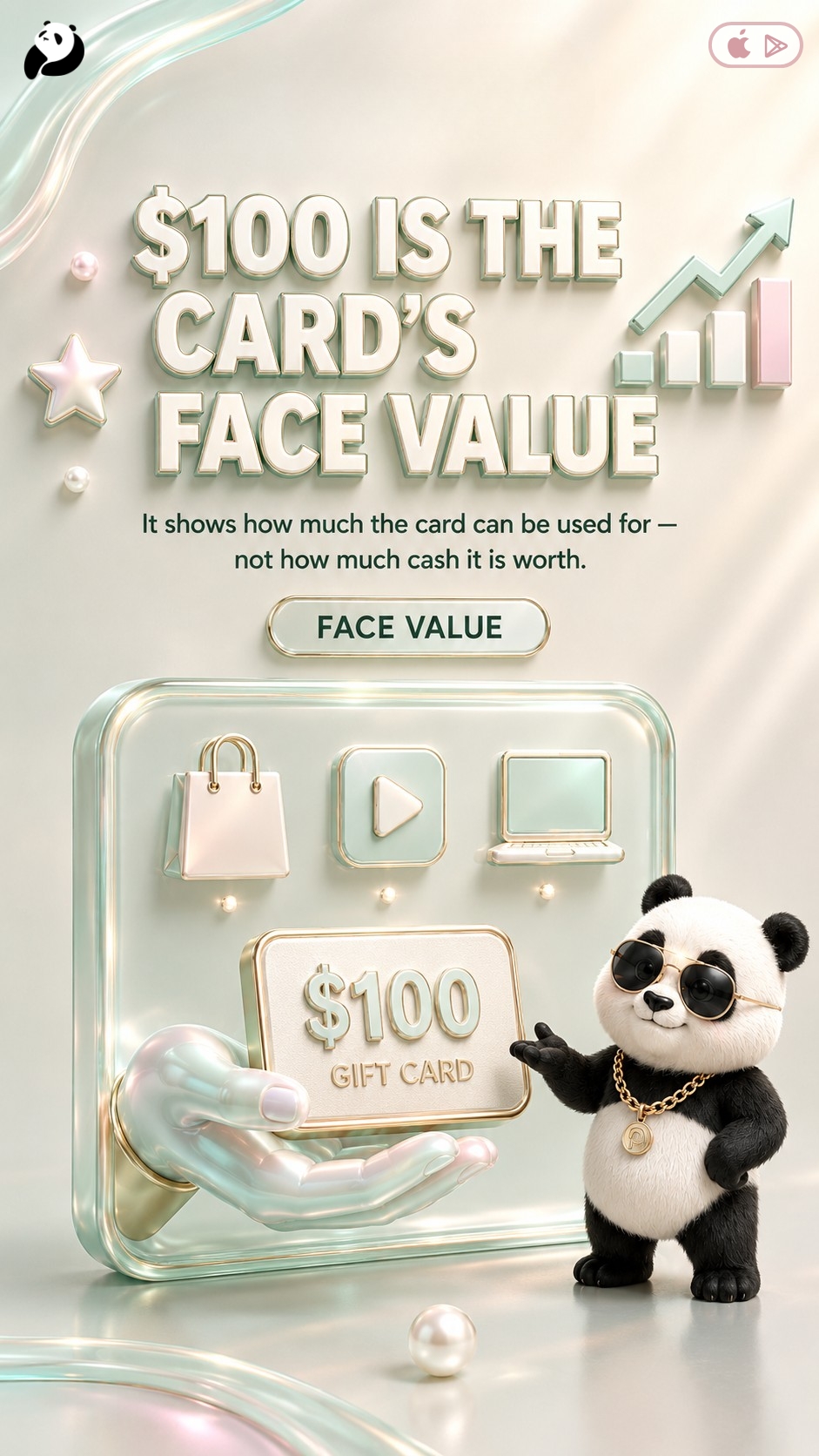
A $100 gift card can normally provide up to $100 of eligible spending value within the brand or service it belongs to.
The number tells you how much the card can be used for — not how much cash someone will pay when buying the card from you.
It means you need to look beyond the printed $100 and check the card’s current trading value.
A gift card can keep its $100 face value while having a separate resale value in the gift card trading market.
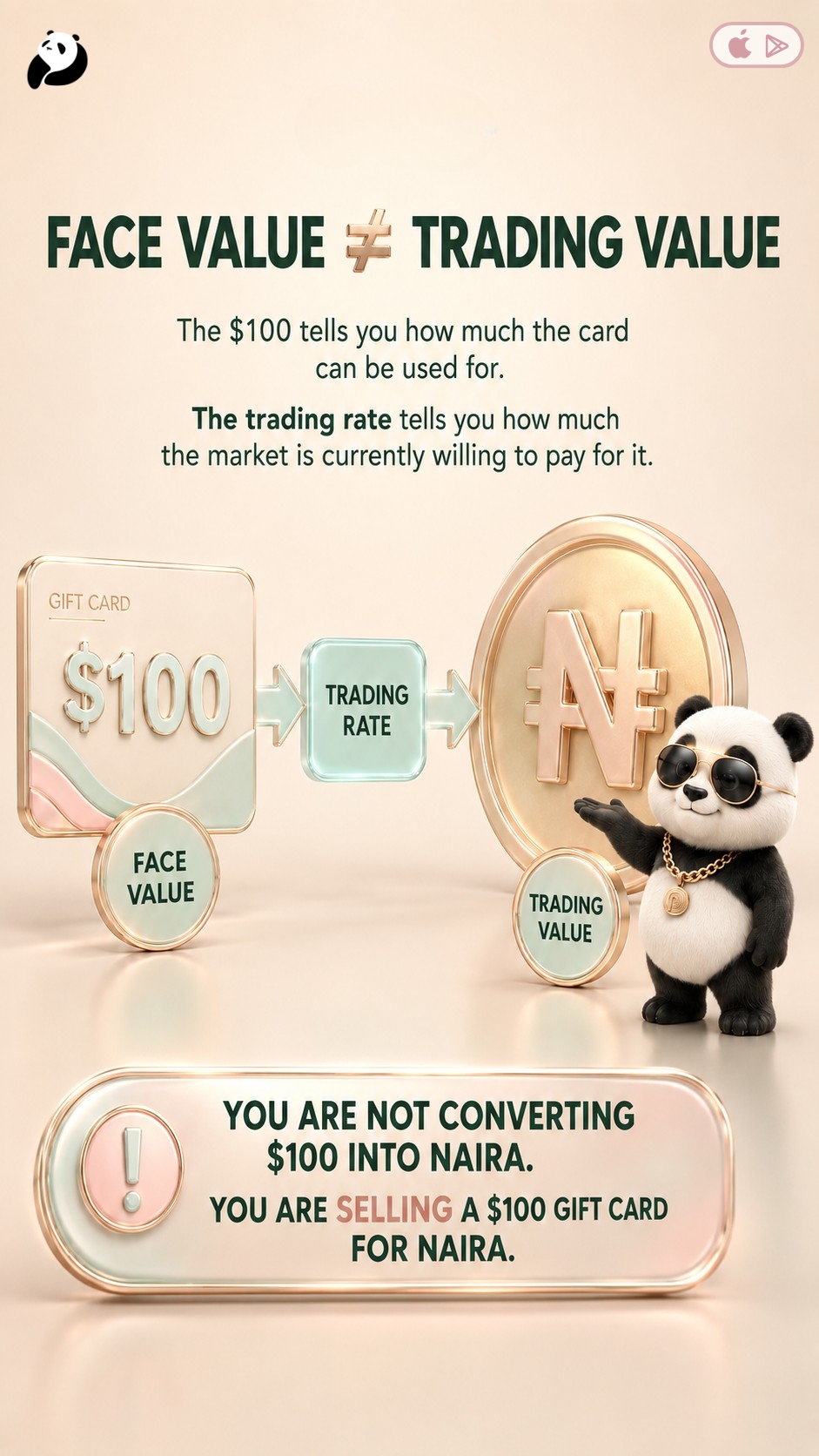
The amount printed on the card, such as $100. It describes how much value the card can normally be used for.
The amount the gift card market is currently willing to pay when the card is sold.
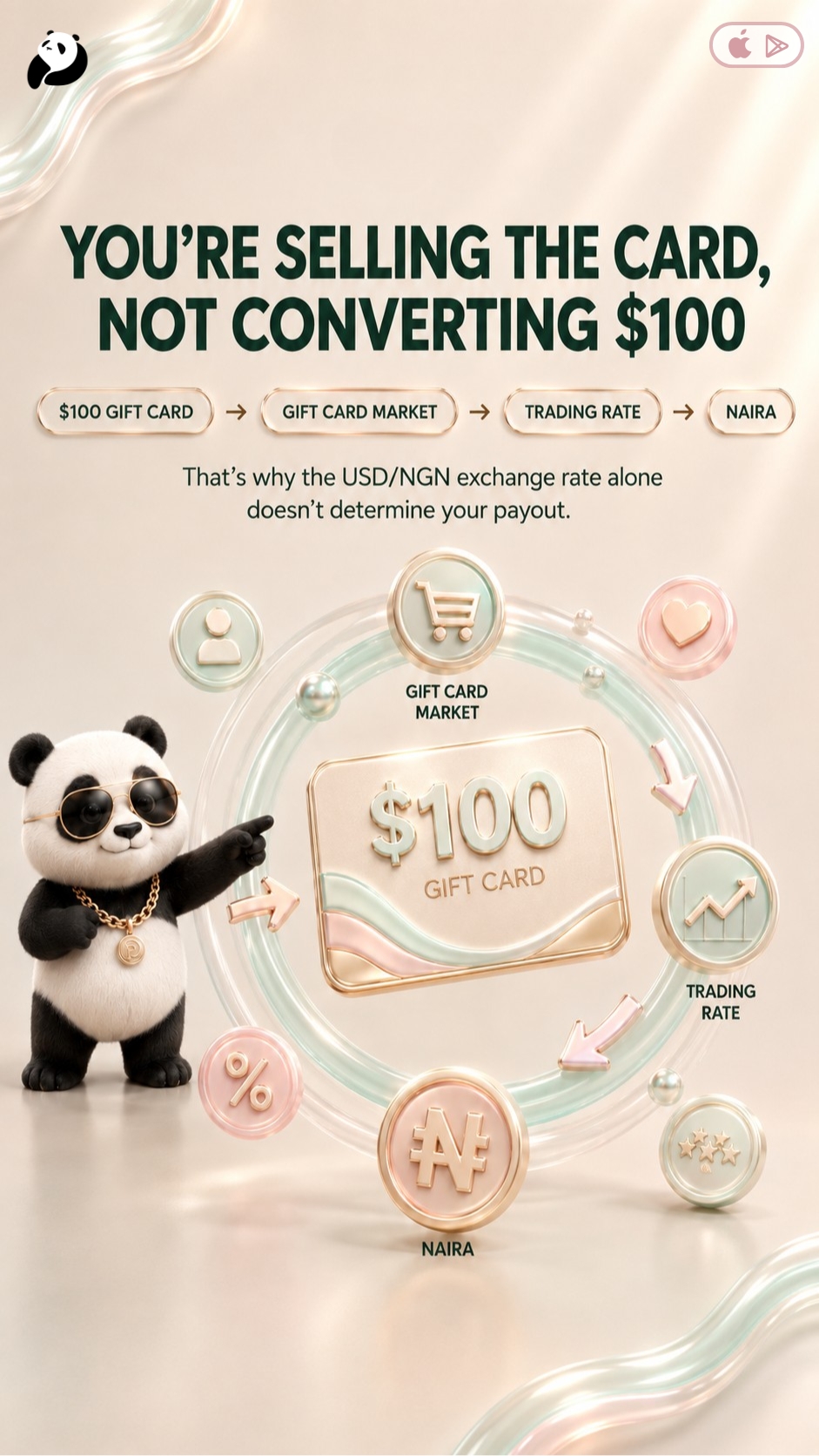
$100 Gift Card → Trading Rate → Naira. The printed face value does not disappear; it simply is not the same thing as the resale value.
Gift card trading is a sale in a resale market. It is not the same transaction as converting USD cash directly into Nigerian Naira.
How much is one currency worth compared with another currency?
How much is this particular gift card currently worth when it is sold?
The USD/NGN exchange rate alone does not determine your final gift card payout. The card’s trading value matters.
The $100 printed on the card is its face value. When you sell the card, its trading value determines how much Naira can be received.